

Our Verdict
Raw diets occupy a genuinely contested space in pet nutrition — the claims are compelling to many owners, but the documented risks are real and the supporting evidence is limited. Commercial kibble and wet food diets that meet established nutritional standards remain the safer baseline for most pets. For owners determined to explore raw feeding, working closely with a veterinary nutritionist is essential.
Best suited for healthy adult pets in low-risk households where the owner is prepared to work with a veterinary nutritionist, follow strict food-safety protocols, and have the diet independently reviewed for nutritional completeness.
What Raw Diets Actually Are
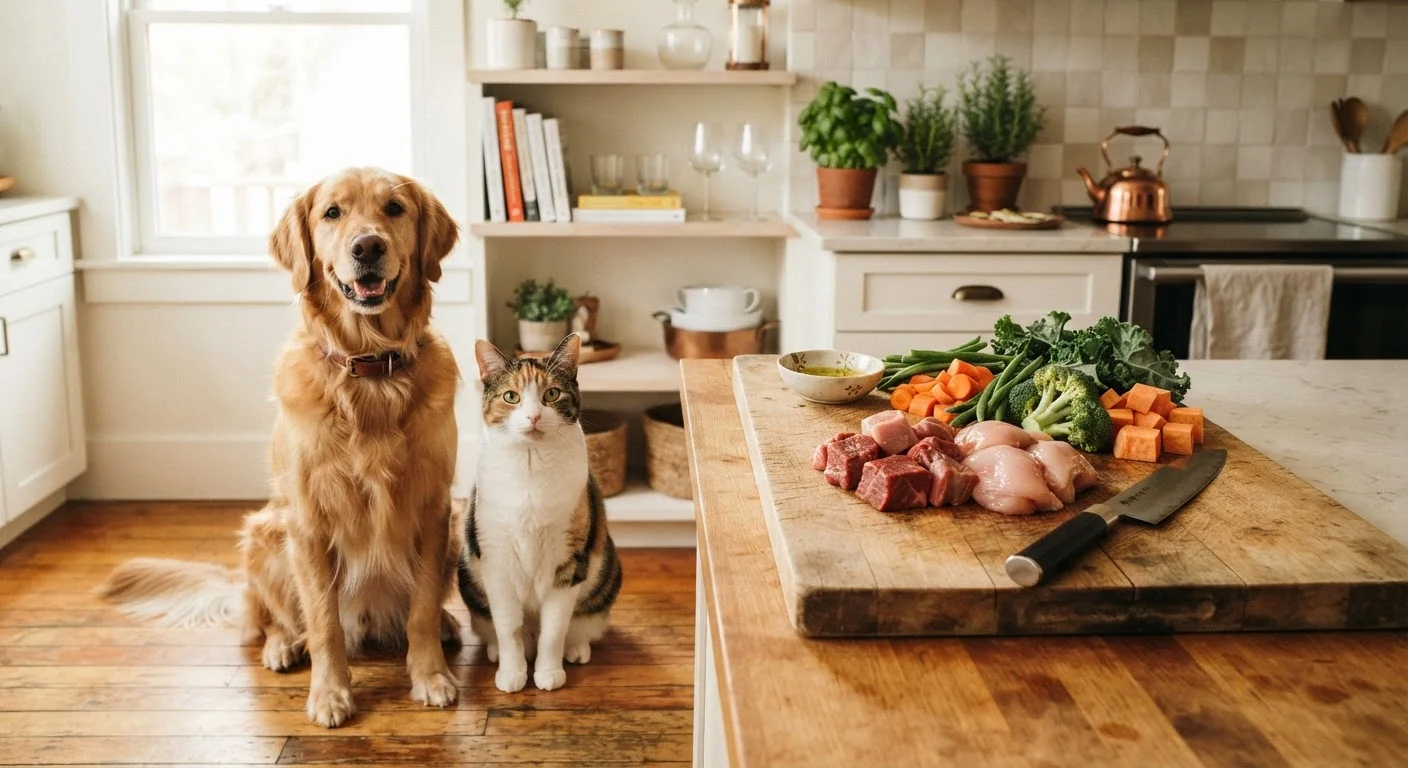
Raw pet diets — sometimes called BARF diets (Biologically Appropriate Raw Food or Bones and Raw Food) — typically consist of uncooked muscle meat, raw meaty bones, organ meat, and varying amounts of fruits, vegetables, and eggs. Commercial versions are available as frozen or freeze-dried products, while many owners prepare their own at home.
The core idea is that dogs and cats evolved eating whole, unprocessed prey animals, and that modern cooking and processing degrades nutritional quality. Proponents argue that returning to raw ingredients produces a more 'natural' diet. However, domesticated dogs have been shaped by thousands of years of co-evolution with humans — including documented genetic adaptations for starch digestion — making simple comparisons to wild ancestors biologically imprecise.
For a broader view of how raw diets compare to other formats, see our breakdown of wet food, dry kibble, and raw diets.
Claimed Benefits: What Owners Report vs. What Evidence Shows
High protein content from whole animal sources
Raw diets are typically dense in animal protein with minimal processing, which may support muscle maintenance in some animals — though digestibility varies by individual.
Lower in fermentable carbohydrates
Grain-free raw diets tend to produce smaller, firmer stools in many dogs, which owners often interpret as a sign of better digestion and nutrient absorption.
Potential dental benefit from raw meaty bones
Mechanical chewing on appropriate raw bones may reduce plaque accumulation in some dogs, though this benefit must be weighed against the risk of tooth fractures and bone-fragment injury.
Owner visibility over ingredients
Preparing raw meals gives owners direct control over what goes into their pet's food, which appeals to those concerned about processing aids, preservatives, or ingredient sourcing.
Owners who feed raw frequently report improvements in coat quality, energy levels, stool volume, and dental health. Some of these observations may reflect real changes — for example, raw diets tend to be lower in fermentable carbohydrates, which can reduce stool bulk. However, most reported benefits are anecdotal. Controlled clinical studies specifically examining raw diets in companion animals are limited in number and often small in scale.
One area of genuine interest is digestibility. Some research has found higher apparent digestibility coefficients for protein in raw diets compared to certain extruded kibbles, though results vary depending on ingredient quality and individual animals. Dental benefits from raw meaty bones are also plausible mechanically, but carry the countervailing risk of tooth fracture and intestinal injury from bone fragments.
Documented Risks: What the Evidence Is Clearer On
Documented bacterial contamination risk
FDA testing of commercial raw pet foods has detected Salmonella, Listeria monocytogenes, and other pathogens at rates higher than in processed pet foods, posing risk to both animals and humans in the household.
Nutritional imbalances are common
Published analyses of homemade raw diets consistently find that the majority do not meet AAFCO nutritional profiles, with frequent deficiencies in key minerals and vitamins that can cause serious long-term health problems.
Risk of bone-related injuries
Whole and fragmented bones in raw diets are a recognized cause of tooth fractures, oral lacerations, esophageal obstruction, and gastrointestinal perforation in both dogs and cats.
Household transmission of pathogens
Pets on raw diets shed higher levels of Salmonella and other bacteria in feces and saliva, increasing exposure risk for children, elderly individuals, and immunocompromised people in the home.
Opposed by major veterinary organizations
The AVMA and AAHA both officially advise against raw feeding based on microbiological and safety evidence, meaning owners choosing this approach may face limited veterinary support.
Higher cost and time commitment
Sourcing, preparing, and storing raw food safely requires significantly more time, space, and expenditure than purchasing commercially prepared, nutritionally complete pet food.
The risks associated with raw feeding are better documented than the benefits. The U.S. Food and Drug Administration (FDA) and the American Veterinary Medical Association (AVMA) have both raised concerns based on published microbiological testing of commercial raw pet foods.
7.7%
Raw pet food samples testing positive for Salmonella
According to FDA testing of commercially available raw pet food products, published as part of the agency's ongoing pet food safety monitoring program.
~60%
Homemade raw diets failing nutritional guidelines
Multiple published studies analyzing owner-prepared raw diet recipes have found that the majority do not meet established AAFCO or NRC nutrient profiles for complete and balanced nutrition.
Beyond pathogen exposure, nutritional imbalance is a significant and underappreciated concern. Studies analyzing homemade raw diets have consistently found that the majority fail to meet established nutritional guidelines — often deficient in calcium, phosphorus, zinc, or vitamin D, and sometimes dangerously excessive in vitamin A from organ-heavy recipes. Even commercial raw products have shown inconsistent nutrient profiles in independent testing.
Owners should also be aware of household transmission risks. Pets fed raw diets shed pathogens in their feces and saliva at higher rates, which is a meaningful consideration in homes with young children, elderly individuals, or immunocompromised family members. The companion article on toxic foods for pets covers related safety concerns around what pets ingest.
What Veterinary Organizations Currently Recommend
The AVMA's official policy discourages feeding raw or undercooked animal-source proteins to pets due to risks to animal and human health. The American Animal Hospital Association (AAHA) maintains a similar position. These recommendations are not based on commercial food industry preferences — they reflect the same food-safety principles applied to human raw meat handling.
Cats and Raw Feeding: Additional Considerations
Cats are obligate carnivores with specific requirements for taurine, arachidonic acid, and preformed vitamin A — nutrients found in animal tissue. While this makes the intuitive case for raw feeding seem stronger for cats, the same contamination and nutritional imbalance risks apply. Raw fish fed regularly can also deplete thiamine (vitamin B1) due to thiaminase activity, potentially causing serious neurological problems. Any raw diet for cats should be evaluated by a veterinary nutritionist.
It is worth noting that veterinary consensus is not unanimous. Some integrative and holistic veterinary practitioners advocate for raw feeding with appropriate sourcing and supplementation. The gap between mainstream and integrative veterinary opinion on this topic is real, and owners are likely to encounter conflicting guidance. The key distinction is that advocates of raw feeding bear the burden of demonstrating safety and nutritional adequacy — that evidence base is currently thin compared to the risk evidence.
If you are considering any unconventional diet, including home-cooked meals for your pet, veterinary nutritionist oversight is strongly advisable.
Practical Guidance for Owners Considering Raw Feeding
If you decide to explore a raw diet despite the risks, several practices can reduce — though not eliminate — the hazards involved. The most important step is consulting a board-certified veterinary nutritionist (DACVN) who can formulate or evaluate a recipe against established standards such as those from the Association of American Feed Control Officials (AAFCO) or the National Research Council (NRC).
- Source meat carefully: Use human-grade meat from reputable suppliers and handle it with the same food-safety discipline you would apply to raw meat prepared for yourself.
- Freeze appropriately: Freezing at –4°F (–20°C) for at least three days can reduce — but not eliminate — some parasites.
- Avoid whole bones for dogs prone to gulping or with dental disease: Bone fragments are a documented cause of gastrointestinal perforation and tooth fractures.
- Schedule more frequent veterinary check-ins: Bloodwork and weight monitoring help catch nutritional deficiencies before they become clinical problems.
Owners managing pets with weight issues should also be aware that caloric density varies widely in raw diets. The relationship between diet and pet obesity is worth understanding before making significant feeding changes.
This article is for general informational purposes only and does not constitute veterinary or medical advice. Always consult a licensed veterinarian before making significant changes to your pet's diet, especially if your pet has existing health conditions.
The content on this site is for informational purposes only and is not a substitute for professional advice. Always consult a qualified professional for guidance specific to your situation.