

Why the Oil You Choose Actually Matters
Walk down any hair care aisle and you'll find oils marketed for shine, growth, moisture, and everything in between. But calling something a "hair oil" glosses over a meaningful reality: each oil has a distinct chemical composition — a different balance of fatty acids, molecular weight, and molecular size — that determines whether it penetrates the hair shaft, coats the surface, or does something in between.
Getting that match right isn't about finding a miracle product; it's about understanding what each oil can physically do for your specific hair type and concern. Understanding how your hair absorbs and retains moisture will sharpen how you use every oil in this guide.
| Oils that penetrate the hair shaft | Coconut, sweet almond, avocado (Based on fatty acid molecular weight research) |
| Oils that primarily coat the surface | Castor, jojoba (wax) |
| Lightest-weight option for fine hair | Jojoba or argan |
| Best application for heavy oils | Dilute with a lighter carrier oil before use |
| Common pre-wash treatment oil | Coconut oil (applied 30–60 min before shampooing) (General hair care consensus) |
| Oil most similar to scalp sebum | Jojoba (liquid wax) |
A Look at the Most Common Natural Oils
Here's how the oils you're most likely to encounter actually behave — and what they're genuinely suited for.
Coconut Oil
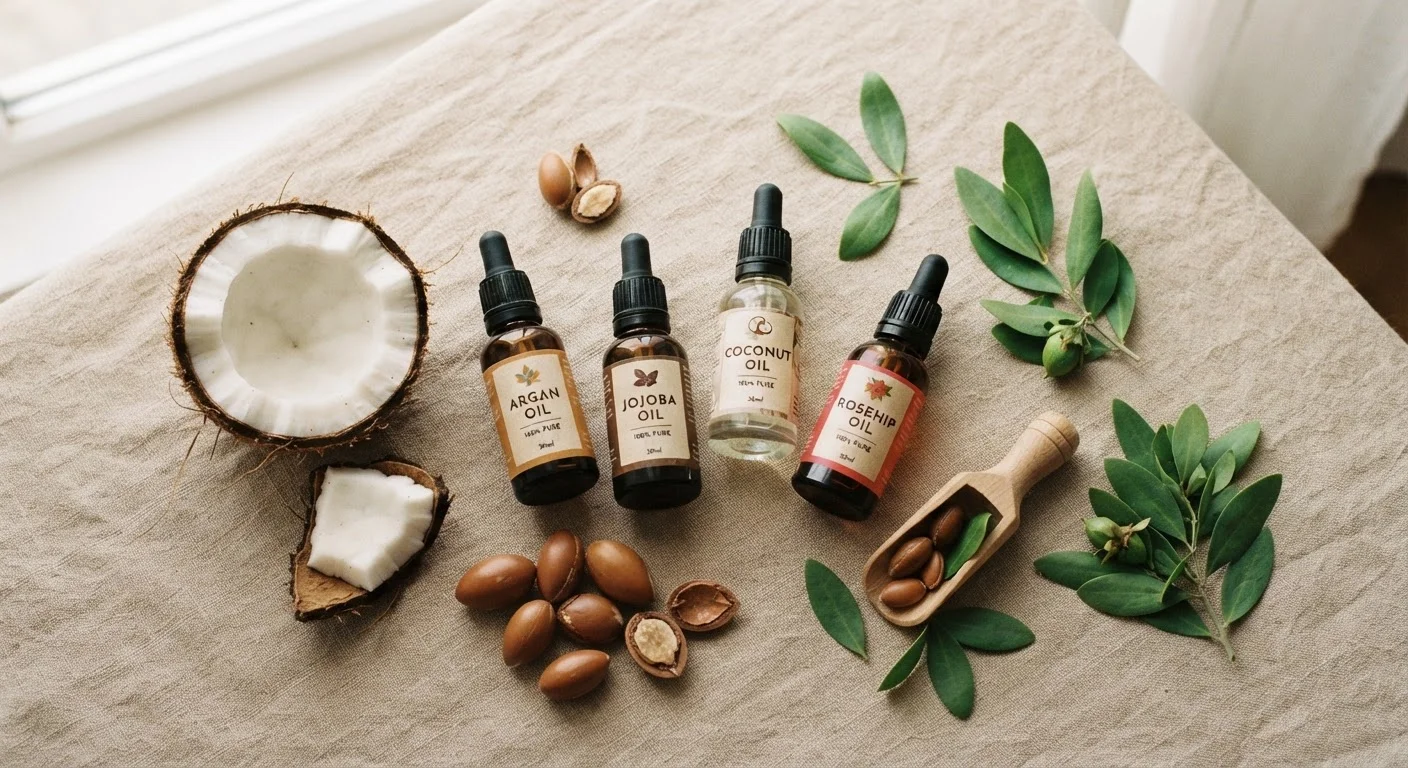
Coconut oil is rich in lauric acid, a medium-chain saturated fatty acid with a low molecular weight. Research suggests it can penetrate the hair shaft (rather than just coating it), which may help reduce protein loss during washing. It works well as a pre-shampoo treatment for medium-to-high porosity hair. However, it can feel heavy or cause buildup on fine or low-porosity hair, and some people find it stiffens their strands with repeated use.
Argan Oil
Argan oil is high in oleic and linoleic acids and vitamin E. Its molecular profile sits somewhere between penetrating and surface-coating, making it versatile as a finishing oil to add shine and reduce frizz. It absorbs fairly quickly and rarely leaves a greasy residue, which makes it a reasonable choice for nearly every hair type when used in small amounts.
Jojoba Oil
Technically a liquid wax rather than a true oil, jojoba closely resembles the scalp's natural sebum. It sits primarily on the surface and is valued for scalp application — particularly for balancing dry or flaky scalps. Because it doesn't penetrate deeply, it's a useful carrier when diluting thicker oils, and it works well for fine hair that needs light conditioning without weight. For more on scalp balance, see our guide to scalp health from the ground up.
Castor Oil
Castor oil is extremely thick, rich in ricinoleic acid, and coats the hair shaft rather than penetrating it. It's often used to reduce moisture loss and add slip for detangling. Because of its viscosity, it's typically diluted with a lighter oil before application. It's commonly applied to edges and the scalp, though scientific evidence for hair growth claims remains limited.
Sweet Almond & Avocado Oils
Both are heavier oils with good penetrating capability. Sweet almond oil is high in oleic acid and works well as a mid-weight conditioning treatment for dry, coarse, or color-treated hair. Avocado oil contains vitamins A, D, and E and can benefit both the scalp and the strand, particularly for very dry or high-porosity hair types.
Hair porosity
How readily the hair cuticle allows moisture and products to enter and exit the strand. Low-porosity hair resists absorption; high-porosity hair absorbs easily but loses moisture quickly.
Lauric acid
A medium-chain saturated fatty acid found abundantly in coconut oil. Its small molecular size allows it to penetrate the hair shaft more effectively than most other fatty acids.
Sebum
The natural oil produced by sebaceous glands in the scalp. It lubricates and protects both the scalp and the hair strand closest to the root.
Ricinoleic acid
The dominant fatty acid in castor oil, comprising roughly 90% of its composition. It contributes to the oil's distinctive thick viscosity and coating behavior on hair.
Carrier oil
A neutral, typically plant-based oil used to dilute thicker or more concentrated substances before application, making them easier to spread and less likely to cause buildup.
Matching Oil to Hair Concern
No oil is universally suited to every head of hair. Here's a practical starting framework:
- Dryness and brittleness: Look to penetrating oils like coconut or avocado for pre-wash treatments.
- Frizz and surface smoothing: Lighter surface oils like argan work well as finishing products applied to damp or dry hair.
- Scalp dryness or flaking: Jojoba is a gentle, sebum-like option that won't clog pores easily.
- Fine or low-porosity hair: Avoid heavy oils; opt for argan or jojoba in small amounts.
- Color-treated or high-porosity hair: Heavier, richer oils like sweet almond or avocado can help seal the raised cuticle.
How you cleanse after applying oil also matters. A clarifying shampoo is often needed to remove buildup from heavier oils, while lighter oils can often be washed out with a regular or moisturizing formula. If you oil frequently, consider how your overall cleansing method fits your routine — co-washing versus shampooing affects how well oils are removed and balanced over time.
~90%
Ricinoleic acid content in castor oil
Castor oil's unusually high ricinoleic acid concentration gives it its characteristic thickness and surface-coating behavior on strands.
~48%
Lauric acid content in coconut oil
Studies on hair fiber have noted coconut oil's relatively high lauric acid content as the reason it penetrates the shaft more readily than many other plant oils.
This article is for general informational purposes only. Individual hair needs vary; if you have a scalp condition or medical concern, consult a licensed dermatologist or trichologist.
The content on this site is for informational purposes only and is not a substitute for professional advice. Always consult a qualified professional for guidance specific to your situation.