

Our Verdict
Home technology works best when it removes friction from tasks you already do every day — adjusting the thermostat, answering the door, or turning off lights you forgot about. The devices that earn their place are invisible in the best sense: they work quietly in the background. The ones that disappoint tend to require constant app management, depend on ecosystems that fragment over time, or simply duplicate something a light switch or timer already does.
This overview is most useful for homeowners or renters who are curious about connected devices but want an honest, unsponsored perspective before spending money.
How to Judge Any Home Tech Device
Before walking room by room, it helps to have a simple framework. A home device earns its keep when it does at least one of three things: saves meaningful time or effort on a repeated task, provides information you couldn't easily get otherwise, or prevents a real and recurring problem. If a device does none of those things reliably, it's probably a gimmick — no matter how impressive the demo looks in a store.
It's also worth checking compatibility before you buy. See our compatibility checklist to confirm a new gadget will actually work with your existing setup. And if data privacy is a concern, understanding what devices collect is a smart starting point.
Automates genuinely repetitive daily tasks
Devices like smart thermostats and scheduled lighting handle recurring adjustments without requiring manual input, freeing up mental bandwidth over time.
Remote monitoring adds real peace of mind
Video doorbells, leak sensors, and security cameras give homeowners visibility into their property when they're away — addressing a genuine, recurring concern.
Energy management can reduce utility costs
Smart thermostats in particular can optimize heating and cooling schedules based on occupancy, which can lead to measurable energy savings over a full year.
Voice control improves accessibility
For people with mobility limitations or disabilities, voice-activated lighting, locks, and appliances can meaningfully improve independence at home.
Modular setup lets you start small
Unlike a full renovation, most smart home devices can be added one at a time, allowing households to test value before committing to an entire ecosystem.
Living Room: High Hit Rate, a Few Misses
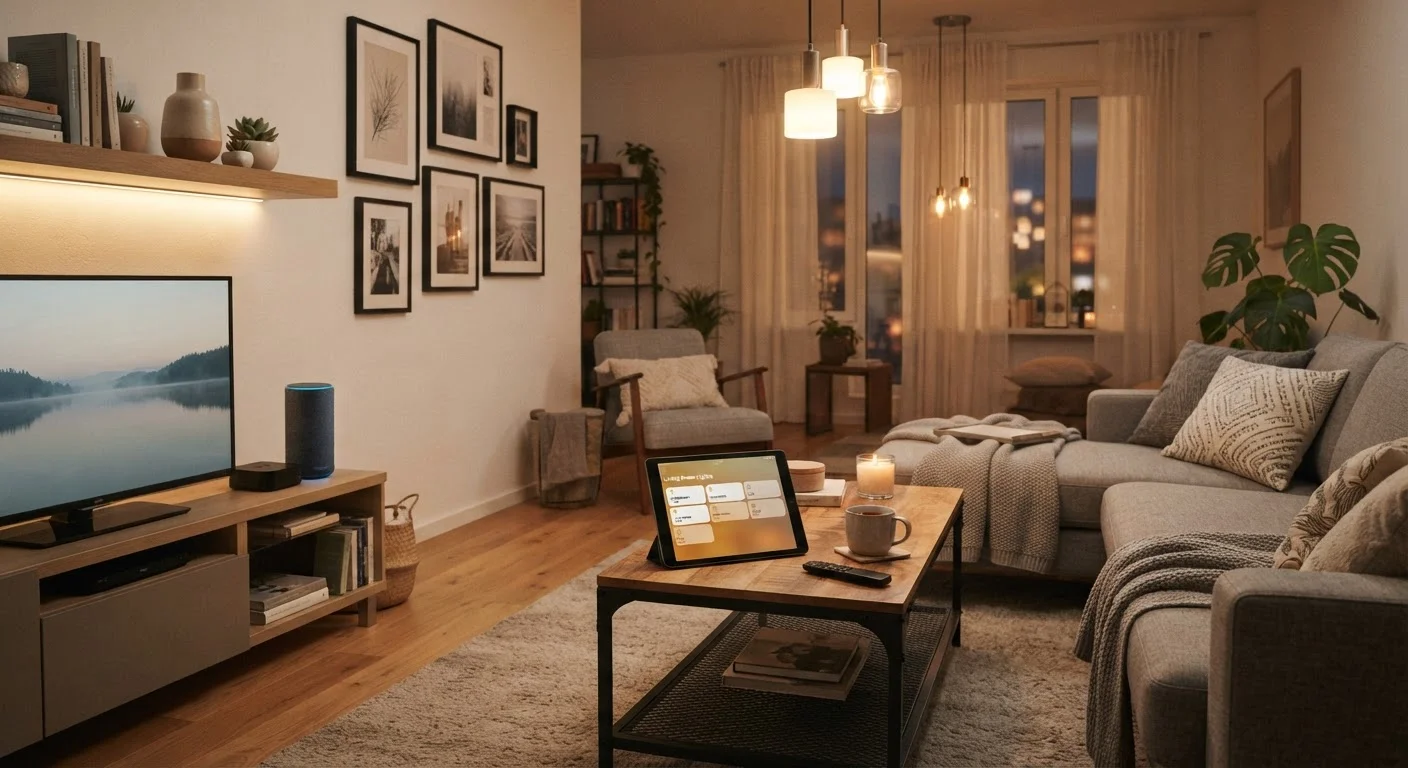
The living room is where home technology tends to perform best. Smart speakers and displays genuinely earn their place for most households — they answer questions, play music, set timers, and serve as hubs for other devices without demanding much from you. Our comparison of smart speakers vs. smart displays breaks down which format suits different rooms and routines.
Smart lighting is another practical category, especially in multi-story homes or for people who frequently forget lights on. Automating a few fixtures on schedules or motion triggers has clear value. That said, replacing every switch in your home before you've tested one or two rooms is a common and expensive overreach.
Smart TVs are now so standard that they barely count as a conscious choice — just be aware that most collect viewing data by default, and the settings to limit this are usually buried.
What's less useful: smart power strips that require app control to do what a standard power strip already handles, and universal remotes with touchscreen interfaces that are slower to use than the buttons they replaced.
~50%
U.S. households with at least one smart device
According to Statista consumer survey data, roughly half of American households report owning at least one connected smart home device.
Top 3
Most-used smart home categories
Smart speakers, smart TVs, and smart thermostats consistently rank as the most widely adopted connected home devices in U.S. consumer surveys.
Kitchen: Useful Gadgets, Overcrowded Category
The kitchen has attracted more connected gadgets than almost any other room, and the signal-to-noise ratio is low. A few devices stand out as genuinely useful. Smart refrigerators with internal cameras let you check contents remotely — a real convenience if you grocery shop without a list. Connected coffee makers with scheduling features are practical if your mornings are rushed and consistent.
On the other hand, app-controlled slow cookers, Wi-Fi-enabled scales, and Bluetooth-connected blenders add an extra layer of complexity to tasks that manual controls already handle well. If you have to open an app to start a blender, the technology has created a problem rather than solved one.
Smart displays on a kitchen counter can replace a recipe book, run timers, and stream music — that's a device pulling real weight. If you're thinking about where to prioritize your budget, the kitchen rewards selective choices over comprehensive automation.
App dependency creates friction, not less
Devices that require app management for basic functions often introduce more steps than they remove, especially compared to simple physical controls.
Ecosystems fragment and products are discontinued
Smart home platforms have a history of being shut down or dropping support for older devices, leaving buyers with hardware that no longer functions as intended.
Connected devices collect and transmit data
Most smart home products share usage data with manufacturers by default; understanding what's collected and adjusting privacy settings requires deliberate effort.
Upfront costs can be significant
Premium devices like smart mattresses, motorized blinds, and full lighting systems can represent thousands of dollars of investment with uncertain long-term value.
Wi-Fi reliability affects every connected device
A weak or unstable home network causes smart devices to behave unpredictably, and troubleshooting connectivity issues adds an ongoing maintenance burden.
Many devices solve problems most people don't have
App-connected kitchen appliances, Bluetooth-enabled toothbrushes, and smart mirrors often add complexity to tasks that simple, durable tools already handle well.
Bedroom and Bathroom: Niche Value, Honest Limits
The bedroom is where personal preference matters most. Smart plugs on lamps and voice-activated lighting are low-cost, high-convenience additions. Sleep trackers — whether standalone devices or wearables — can surface useful patterns around sleep duration and disruption, though the accuracy of sleep stage data varies by device and should be treated as general guidance rather than clinical measurement.
Higher-ticket items like smart mattresses (with adjustable firmness via app) or motorized blackout blinds that open on a schedule are genuinely useful for some users — particularly those with irregular schedules or strong light sensitivity. For most households, though, they represent significant expense for limited daily gain.
In the bathroom, the picture is clearer: smart mirrors with weather displays and voice assistants tend to be expensive for what they offer, and their screens add visual clutter to a room that benefits from simplicity. Water leak sensors, however, are an underrated and inexpensive device that can prevent thousands of dollars in damage — they belong under every sink and near the washing machine. For a broader look at home systems worth monitoring, see the annual home audit checklist.
Water Leak Sensors: The Overlooked Essential
Water damage is among the most common and costly home insurance claims in the United States. Small, inexpensive sensors placed under sinks, near washing machines, and around water heaters can detect leaks early and alert you via smartphone before minor drips become serious damage. They require no hub, no subscription, and minimal setup — making them one of the clearest value propositions in home technology regardless of how much automation you want elsewhere.
Entryway and Whole-Home Systems: Where Tech Earns Its Keep
If there's one category that consistently justifies itself, it's the entryway. Video doorbells let you see and speak to whoever is at the door without being home — useful for package deliveries, for households with children, and for general security awareness. Smart locks remove the need to carry keys and allow temporary access codes for guests or service workers, which solves a real, recurring problem for many households.
Smart thermostats are widely regarded as the single strongest value proposition in home automation. They learn usage patterns, allow remote adjustment, and in many cases reduce energy consumption in measurable ways — without requiring much ongoing management. For those thinking about building automation routines, the thermostat is the natural starting point.
For anyone considering connecting multiple devices into a single system, setting up a smart home hub explains how to make devices work together without overcomplicating the setup. Also consider the wired vs. wireless trade-offs that most buying guides skip over.
The content on this site is for informational purposes only and is not a substitute for professional advice. Always consult a qualified professional for guidance specific to your situation.